- Ally's Newsletter
- Posts
- Who can you call when the walls are melting?
Who can you call when the walls are melting?
Psychedelic first responders

Ally Mexicotte
August 15, 2023
gm! I hope you had a wonderful and rejuvenating weekend.
I spent 6 hours on Saturday lost (figuratively) in the Colorado woods, watching beautiful streams flow through shimmering rocks and tree roots, all with the backdrop of ancient mountains standing several thousand feet tall.
I touched grass for the first time in several weeks and thought to myself, “I should do this more often.”

Somewhere in Colorado
Psychedelic First Responders
Living in Colorado in the 21st century and being a big Tim Ferriss podcast listener, I’m exposed to a lot of content and research about psychedelic mushrooms.
And I’m probably not alone. As you’ve probably noticed, there’s been a huge boom in microdosing popularity over the past few years.
But with great power comes great responsibility (obvi).
If you are one of the many who are experimenting with psychedelics, what happens if you or a friend has a frightening or stressful experience while on these substances? Do you have someone to guide you through that experience and integrate it into your life afterwards?
“Of course, Indigenous communities spent thousands of years mastering that very stuff: the understanding, the preparation, the support structures that help make a brain-exploding experience positive. But Western culture, having gotten its hands on these substances, showed little interest in that wisdom—at least until recently” explains Chris Colin, a WIRED author writing on the subject.
Who can you call when the walls are melting?
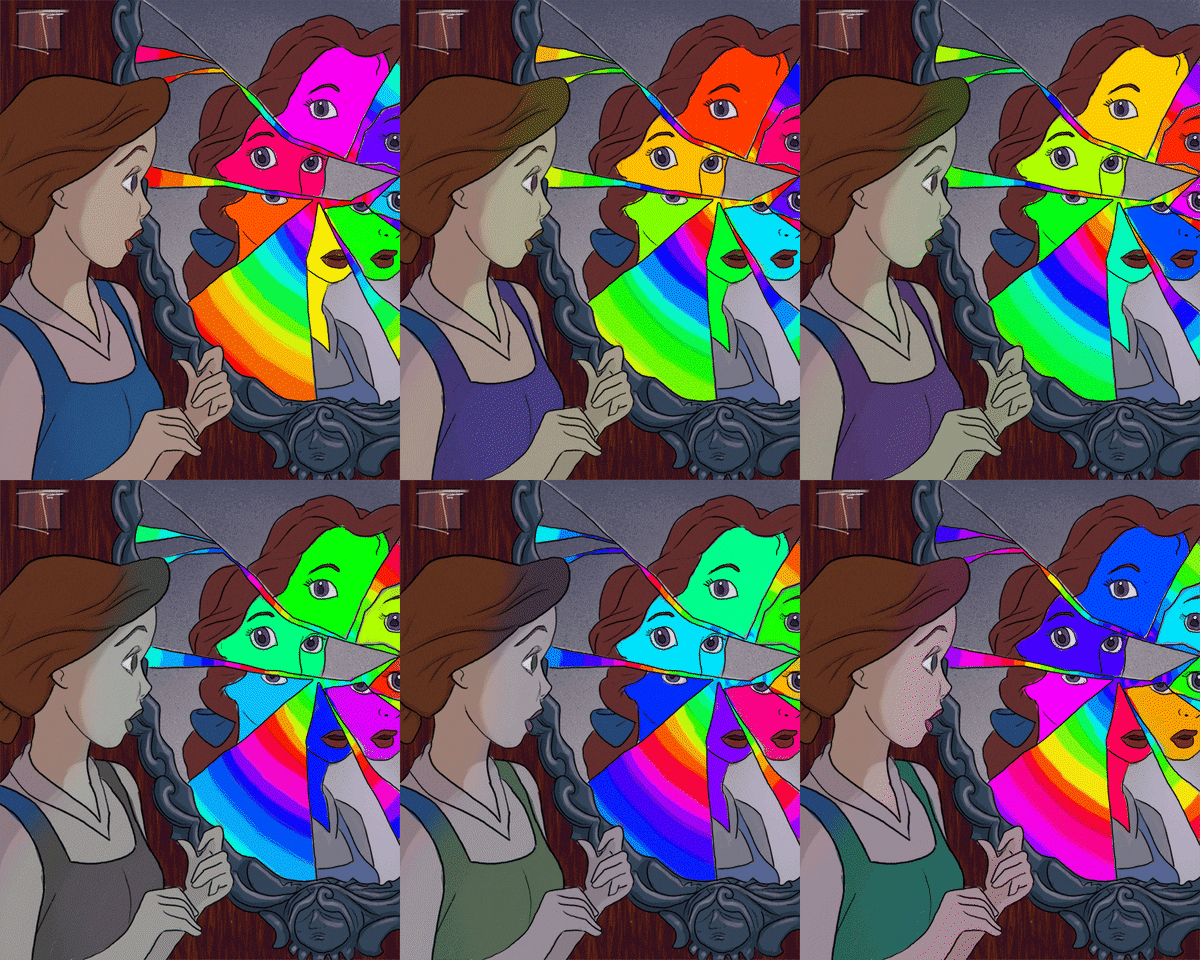
That’s where the Fireside Project comes in. A psychedelic peer support line, reachable by phone or text. You can even download the app - in case you don’t trust yourself to save the number - which just has two buttons: “Call” and “Text”.
That way when you’re face down in existential crisis mode while the walls are melting off your face, you aren’t alone. You can talk to someone who’s been there before.
It’s important to note that the people on the other side of the line are “rigorously trained, compassionate, supportive volunteers from diverse backgrounds who listen deeply and from a place of non-judgment” but they are not doctors, and they don’t play one on TV.
A bad trip, or a difficult one?
An interesting perspective shift that we’re seeing in the space is around how we think about “bad trips”. While some psychedelic experiences can certainly be stressful and terrifying, there’s been a small, intentional shift in how people in the field refer to these experiences, as research shows that even the most challenging journeys can lead to positive outcomes.
So if difficult trips aren’t necessarily bad for you, how do you deal with them?
The current understanding is to have someone there who can help calm you down so you can explore, understand, and process what’s going on. Citing Kelley O'Donnell, the director of clinical training at the NYU Langone Center for Psychedelic Medicine, the goal is to feel supported enough to lean into and explore the experience, even if it’s not pleasant.
Don’t be stupid
As Chris put it, “I'm not here to herald the current psychedelic boom; it's been heralded.”
People are curious. Psychedelics are hot again. But even with support systems like the Fireside Project, psychedelic mushrooms aren’t casual play toys. These are ancient plants with powers that our culture is only starting to uncover, and being irresponsible with them not only can impact you, it can impact the entire field of psychedelics and everyone who relies on the plant.
There are multiple studies starting to see the remarkable results that psychedelic mushrooms can have on treatment resistant depression and PTSD, but those studies are put at risk when unregulated use of psychedelics lead to tragedies. If you’ve watched Have a Good Trip on Netflix, you know that this has already happened and we’re just coming out a research winter right now.
Even if you’re careful with experimenting with psychedelics, there are rare cases where a family history of mental illness of bipolar disorder or psychosis leads someone to experience a psychotic episode.
While these cases are exceedingly rare, it’s worth knowing. As always, DYOR (Do Your Own Research).
If you’d like to read the original article on this topic that inspired this summary, click below to read the WIRED article on the Fireside Project. It’s written extremely well written and was a super fun read.
Thanks for reading! If you know of anyone else who would enjoy this type of content, please consider sharing this newsletter with them.
Until next time ✌️
Reply