- Ally's Newsletter
- Posts
- 3 things I learned about designing a good life by moving to an island
3 things I learned about designing a good life by moving to an island
Optimizing for walkability, controlling FOMO, and going international

Ally Mexicotte
January 09, 2024

Welcome to Ally’s Newsletter, a weekly publication where I curate the top ideas and experiments to design a creative, focused life.
For the next few weeks, I’m experimenting with a much shorter format in an effort to save you time and distill the biggest takeaways.
Instead of doing dry January, I joined a super highly rated online course for digital writing where I have to ship 30 pieces of writing for 30 days on Twitter/X.
A lot of those mini-essays will make it onto the newsletter, and it’s where I’ll be quickly testing ideas to see which ones gain traction.
If you’d like to follow along in my journey (and influence which posts I put on the newsletter), connect with me on Twitter.
3 things I learned about designing a good life by moving to an island
A few years ago, my husband and I were unhappy with just about every big aspect of our lives. We didn't like our tech jobs, the city we lived in, or feel inspired by our day-to-day.
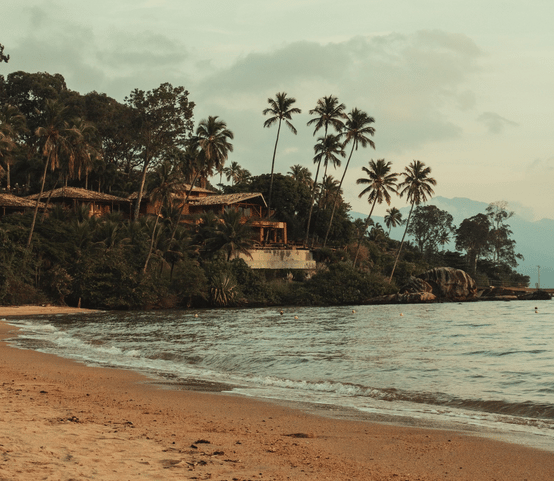
We made a lot of changes that year, and one of them was to move to an island for a few months to scuba dive.
Moving to island is not your typical response to "I don't love the way my life is panning out," but it was an incredible experience that fundamentally changed the way I think about how I design my own life.
Here are the top 3 things I learned from this experience:
1. Deciding to live in a walkable location is the one decision that simplifies 1,000 other downstream decisions.
We lived in an area that had only one main road but had everything we needed (groceries, restaurants, coffee shops). Since we didn’t have a car, we ended up walking this road anytime we needed to leave the house, which was sometimes multiple times a day.
Within 4 weeks of living on this small but lively area, if I was walking down the street for a last-minute errand to pick up fruit or more sunscreen, I would run into someone I knew.
We got to know our neighbors, local businesses, and built a community so much faster and easier than we would have in a less walkable area.
I had lived for years in different cities (Metro Detroit, Boston, Portland, Denver), and never felt the sense of community that I did after 4 weeks of living on that little road.
2. Constraints are actually an advantage IF you can control your FOMO.
The area we stayed at had two bars within a 15 min walking perimeter. It felt pretty small and limiting initially.
But after a few weeks, we realized that because there were only 2 bars, it was easier to get to know people we kept seeing. It made it easier to walk up to them and say "hey, I've seen you around. What brings you to the island?" And it actually led to real friendships.
Once I got over my FOMO of wanting endless options, I saw that there's a real strength to all these constraints.
3. The US is expensive, and it's not our only option.
While on the island, we met a nomad from Canada who explained that a lot of young people were leaving because it was too expensive. I started wondering if the US was on a similar path.
While I personally don't intend to permanently move outside of the US, it got me thinking about other options. Why had I never considered moving to a different country for a year?
Are there other examples where I'm unconsciously selecting the "default" option put in front of me? Probably.
Picking up and moving to an island for a few months was a radical reminder that I have a lot more agency than I think to design my life. It taught me about how urban design (re: walkability) impacts my sense of community, how to turn my constraints into advantages, and to explore a wider set of options in my life.
If this mini-essay resonated with you in some way, hit reply and let your girl know! 🫶 It makes my day.
If you know someone who would enjoy these types of ideas, share it with them! Over 50% of my subscribers are from word-of-mouth referrals, and that’s the best way you can support this lil’ newsletter.
Until next time,
Ally
Reply