- Ally's Newsletter
- Posts
- 3 ways I made sure I never had enough time


Me trying to do 5 things at once if I was a handsome young man in a suit
A few years ago, being extremely busy was my norm.
Every second of the day was used to get something done.
I never relaxed, and was always working or getting things I needed to do around the house.
I got A LOT of shit done in a day (as evidenced by my crossed-out to-do list), so I concluded that I just didn’t have enough time.
It wasn’t until I saw my coworker doing way less than me and getting similar results that I started to question why exactly I was doing so much more.
This person was chillin in comparison to me, and he had plenty of time for friends, relaxing, and getting the most important work done.
I was, naturally, pretty infuriated, but it was the wake up call I needed.
It led me down a path where I really questioned my method of deciding what I needed to do and how.
A few years and a couple of fundamental changes later, I now have the time to workout every day, go on short walks to clear my mind, hang out with friends after work, and actually produce higher quality and thoughtful work.
If you’re feeling like you don’t have enough time, let me save you some of it and give you 3 root cause mistakes I made and how I overcame them.
Mistake #1: I conflated wasting time with not being “productive”.
First of all, the currency of our lives (time) is much too valuable to only spend it on being productive.
Secondly, how we define “productivity” might be a borrowed definition. We need your own definition in order to be clear on what a “good use of time” looks like.
Without this fundamental understanding, there was no way for me to feel satisfied with how I was spending my time.
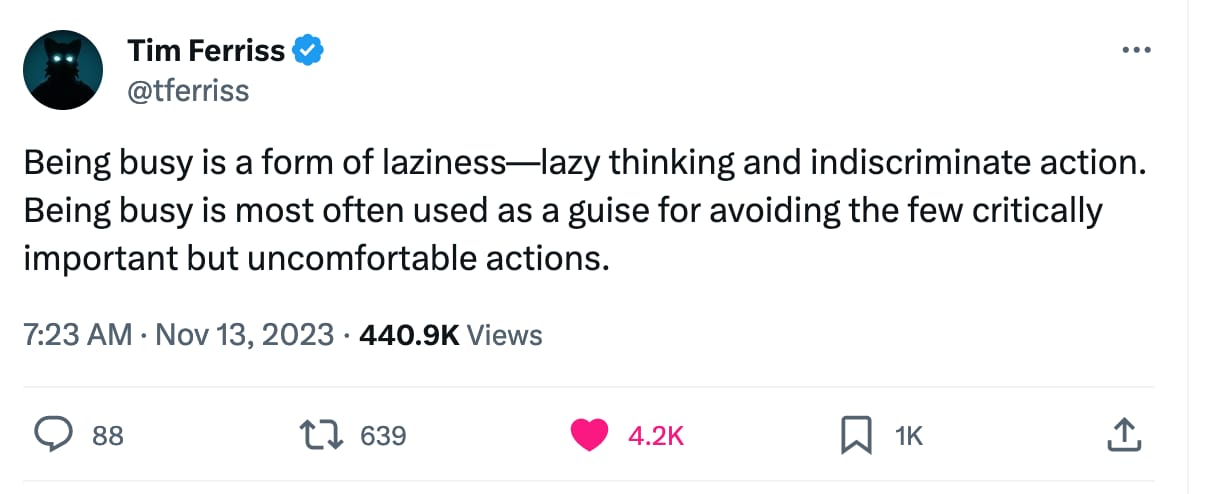
I thought that if I wasn’t constantly working on something that crossed a to-do item off my list, I was wasting time. I’m not sure exactly where I picked up this internal working definition, but it wasn’t serving me. It was serving other people’s priorities.
This is an extremely common problem.
After years of trial, error and reflection, I created a clear definition of what a good use of time is for myself:
If I’m using the time to create something that’s important to me or if it fills me with more energy than I had when I started, it’s a good use of time.
“Create something” can mean an experience with friends, a piece of writing/music, or a useful deliverable for work.
To be super duper clear: this is the opposite of mindlessly consuming what others have created.
Consumption, for me, is only useful if it helps me create something or if it rejuvenates me, which leads me to the second part…
“Fills me with more energy than I had when I started” can mean a walk, being inspired, reading a book, spending time with people who give me energy or lying down for 10 minutes.
Basically, if I’m not creating something or rejuvenating myself, it’s not a good use of my time.
Mistake #2: The cost of doing unimportant things is not tangible
I thought I needed to have all this stuff, do all this stuff, in order to be “successful”.
🔥🔥🔥 It was actually making my life hell 🔥🔥🔥
So many things appear to be “free” but in reality, everything has a cost.
Things that appear to be free have an invisible price tag, and when you take it up to the register, you realize that you’ve racked up a big bill you weren’t prepared for.
How did I make the invisible price tag visible?
As a visual person, I used my calendar to visualize the time cost of each item.
I block off the time that it takes me to get ready in the morning so I can visually see how many hours in a day I have for sleep, work, and leisure.
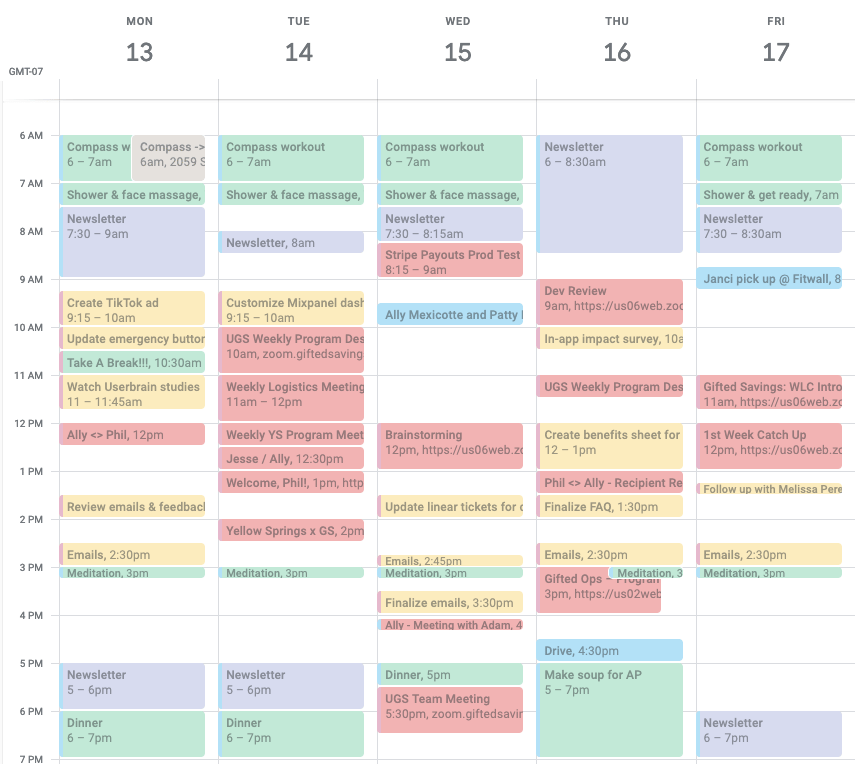
Being able to visualize time and space is one of the perks of being human
Even if you can only get 50% to 80% of what you do on the calendar, you’ll still reap enormous benefits from visualizing where your time goes.
With my limited time currency visualized, I spent my time coins much more discerningly. Each task or outcome that I held myself to every day was put on the calendar, forcing me to estimate how much time I would spend on it.
If I underestimated tasks (and I most certainly did), I paid for it by the end of the day, rushing to get everything completed.
It taught me to choose wisely and be realistic about the time cost of each thing.
Mistake #3: I didn’t stick to a system for prioritization
When you’re overwhelmed, do you have the mental capacity to hold everything you need to do in your head and figure out which task to do first?
The best at what they do - no matter what they do - have systems for challenges they face repeatedly.
My system is simple. I have a tab in OneNote for “to do” items and every week I create a fresh list of things I need to get done. Every time someone asks me to do something, it goes to the bottom of the list.
Every day, I sort the list to put the most important tasks at the top, then I block my calendar with the specific task/outcome that I need to accomplish during that time block.
The key is that I must work from top to bottom of the list.
Just like my developers have a prioritized backlog, I have one too.
Reply